The Biggest Stock Market Crash in History: Lessons and Impact
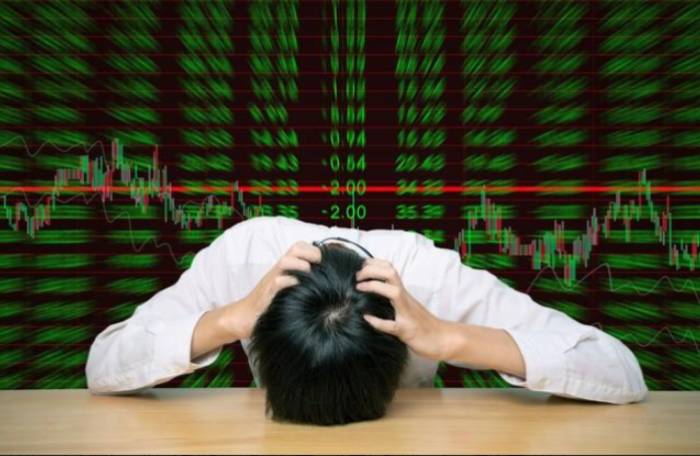
If you ask about the biggest stock market crash, most people will point to a single, terrifying week in October 1929. They're not wrong, but the full story is more complex and far more devastating than a few bad days. The title of "biggest" isn't just about the percentage drop on a chart. It's about the depth of the decline, the sheer duration of the pain, and the catastrophic, global economic collapse that followed. By every meaningful metric—peak-to-trough loss, economic impact, human suffering, and the total evaporation of wealth—the crash that began in 1929 and culminated in the Great Depression stands alone. It wasn't an event; it was an era of financial ruin.
Modern crashes like 1987's Black Monday or the 2008 Financial Crisis were severe, but they were contained by policy responses and occurred within a functioning global system. The 1929 crash was the system breaking. It took nearly 25 years for the Dow Jones Industrial Average to recover its pre-crash peak. Let's break down why it holds this grim record and what it really means for investors today.
What You'll Learn in This Guide
How Do We Measure the "Biggest" Crash?
Calling one crash the "biggest" requires a framework. Looking only at a single-day percentage drop gives you a distorted picture. The 1987 crash wins that prize. A more complete view considers multiple dimensions.
I look at three key factors:
- Scale of Decline: The total peak-to-trough percentage loss in major indices.
- Duration of Recovery: How long it took for the market to claw back to its previous high. This measures the real-world pain for anyone invested.
- Economic & Social Impact: The spillover into bank failures, unemployment, GDP contraction, and societal change. A crash that stays within Wall Street is different from one that destroys Main Street.
When you apply this lens, the 1929-1932 period dominates the conversation. It was a slow-motion avalanche, not a sudden landslide.
The 1929 Behemoth: A Cascade of Failure
Forget the image of a single "Black Tuesday." The crash unfolded in phases over nearly three years, with brutal rallies that repeatedly dashed hopes.
The Dow Jones Industrial Average peaked at 381.17 on September 3, 1929. What followed was a series of hammer blows.
The Initial Panic (Late Oct 1929): "Black Thursday" (Oct 24) saw a 11% intraday drop before a banker consortium intervened, creating a temporary calm. "Black Monday" (Oct 28) and "Black Tuesday" (Oct 29) delivered consecutive 13% and 12% losses. By mid-November, the Dow was down about 40%. Many thought the worst was over. They were catastrophically wrong.
The real devastation came in the ensuing years. A weak rally in 1930 fizzled, and then the bottom fell out. Driven by collapsing international trade (the Smoot-Hawley Tariff Act was a disaster), a cascade of bank failures (over 9,000 by 1933), and a deflationary death spiral, the market entered its darkest period. By July 8, 1932, the Dow bottomed at 41.22.
Let that sink in. A loss of nearly 90% from its peak. A dollar invested at the 1929 high was worth about a dime three years later.
The recovery timeline is the most telling metric. The Dow did not sustainably reclaim its 1929 peak until November 1954—over 25 years later. This fact alone cements its status. If you were a young adult who invested at the peak, you were nearing retirement before you broke even, not accounting for inflation which would make the real-terms loss even worse.
The Amplifiers: Why It Got So Bad
Several factors turned a market correction into a depression.
Margin Debt: Buying stocks with borrowed money (as little as 10% down) was rampant. When prices fell, brokers issued "margin calls," forcing investors to sell other assets to cover losses, which drove prices down further in a vicious cycle.
Banking System Collapse: Banks had heavily invested depositor money in the market. As loans went bad and stock collateral vanished, banks failed. There was no FDIC insurance. When a bank failed, your life savings could literally disappear. This destroyed credit and confidence.
Policy Mistakes: The Federal Reserve, fearing speculation, raised interest rates in 1928-29, tightening credit. After the crash, it failed to act as a lender of last resort to banks, allowing the money supply to collapse. The government also raised tariffs, strangling global trade.
This combination created a perfect storm no other crash has matched.
How Other Major Crashes Compare
To understand the 1929 crash's scale, contrast it with other famous collapses. This table lays out the stark differences.
| Crash / Period | Key Trigger(s) | Peak-to-Trough Decline (DJIA) | Time to Recover Previous Peak | Primary Economic Impact |
|---|---|---|---|---|
| 1929-1932 (Great Depression) | Speculative bubble, margin debt, bank failures, trade wars, policy errors. | ~89% | 25 years | Global depression, 25%+ unemployment, deflation, lasting social/political change. |
| 1987 (Black Monday) | Computerized program trading, portfolio insurance, overvaluation. | ~36% (in weeks) | ~2 years | Sharp, severe financial panic contained by Fed intervention. Minimal recession. |
| 2007-2009 (Financial Crisis) | Subprime mortgage crisis, Lehman Brothers collapse, credit freeze. | ~54% | ~5.5 years (Mar 2009 to Mar 2013) | Deep global recession ("Great Recession"), major bank bailouts, housing market collapse. |
| 2020 (COVID-19 Pandemic) | Global economic shutdown due to pandemic. | ~37% (in weeks) | ~6 months | Sharp, deep but short-lived recession, followed by massive fiscal/monetary stimulus and rapid recovery. |
The 2008 crisis is the closest contender in terms of systemic threat. The decline was over 50%, and the economic fallout was severe. But the policy response—aggressive rate cuts, quantitative easing, TARP—was swift and globally coordinated. It prevented a full-blown depression. The recovery, while painfully slow for many, took about a quarter of the time the 1930s required.
1987 was a spectacular one-day drop (22.6% on Oct 19, 1987) that, in hindsight, was a technical crash. The economy was sound. The Fed flooded the system with liquidity, and confidence returned. It's a masterclass in how to stop a panic from becoming a catastrophe.
The Uncomfortable Lessons for Today's Investor
So, what does the biggest stock market crash teach us now? The most important lessons are uncomfortable because they go against the grain of modern, always-optimistic financial media.
Liquidity is Everything in a Crisis. In 1929, people with cash when the market hit bottom could have bought legendary companies for pennies. Those who were fully invested and, worse, leveraged on margin, were wiped out. Maintaining a cash reserve isn't about timing the market; it's about having dry powder when true opportunities arise. It's about survival.
Policy Matters More Than You Think. The single biggest difference between 1929 and 2008 was the policy response. In 1929, authorities largely stood by. In 2008, they intervened aggressively (if controversially). Today's investors must watch central banks and governments. Their actions can turn a market meltdown into a buying opportunity or a prolonged disaster.
Diversification Beyond Stocks Failed in 1929. A common myth is that a diversified portfolio would have saved you. In the early 1930s, bonds of failing companies defaulted, real estate values collapsed, and even many "safe" bank deposits vanished. The only true hedge was cash and, perhaps, gold (which the U.S. government then confiscated in 1933). This is a sobering reminder that in a true systemic crisis, correlations between assets can converge to 1—they all go down together. Modern diversification helps, but it's not a magic shield.
The Human Psychology of Capitulation. The market didn't bottom in 1929 when the first panic selling ended. It bottomed in 1932, when even the most stubborn bulls had given up hope and sold everything. The biggest gains go to those who can resist that overwhelming despair or, at minimum, avoid selling into it. This is incredibly hard.
Your Burning Questions Answered
The 1929 crash and the Great Depression remain the benchmark for financial catastrophe. Its scale was unique, born from a perfect storm of speculation, structural weakness, and policy failure. While modern markets have firebreaks that make a repeat unlikely, its lessons are timeless: respect leverage, value liquidity, understand that psychology drives markets as much as economics, and structure your finances to survive the worst so you can benefit from the eventual recovery. The biggest crash isn't just a history lesson; it's a permanent case study in financial resilience.
Related Brewing Guides
Ticker Symbols: Why They Became Essential for Stock Trading
A-share market sees a surge with a 31-point increase and nearly 5,000 stocks ris
Non Farm Payrolls Annual Revision: What It Is & Why It Matters